Source TV LED Projector for Home, Business, and Theater
Compare 30 TV LED projector options from verified suppliers. Buyers can evaluate specifications like resolution, brightness, and connectivity for home entertainment, business presentations, and theater use. These devices offer versatile lighting modes and long lifespans suitable for various applications; compare the available evidence and request quotations based on your requirements.
Key considerations
Products List







Comprehensive Sourcing Guide
TV LED Projector Sourcing Guide
Buyers entering the TV LED projector market face a product category that spans low-cost portable units and high-brightness desktop machines, so disciplined sourcing starts with understanding what listings actually signal. Observed product pages in this category mix home entertainment projectors with automotive LED lens lighting, which means keyword searches alone can return adjacent products. This guide helps procurement teams separate genuine projector offerings from mislabeled or mixed-category listings, verify technical claims, and structure supplier qualification around documented evidence rather than marketing copy.
The guidance below is organized around the decisions that matter most when sourcing at B2B scale: defining product scope, confirming specifications, collecting compliance documentation, understanding cost drivers, qualifying suppliers, and planning long-term reorders. Each section asks the buyer to verify specific attributes before committing to a purchase order. Treat every listed attribute as an observation from a product page, not a guaranteed performance claim, and require the supplier to substantiate brightness, resolution, and lifespan figures with documentation before contract award.
Product Scope and Observed Listing Signals
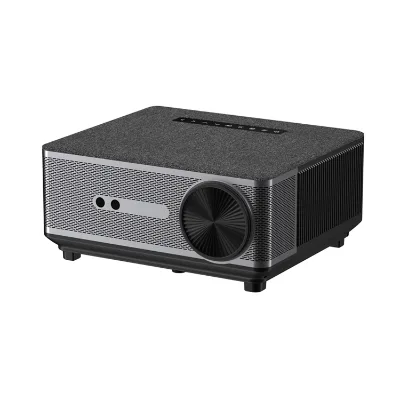
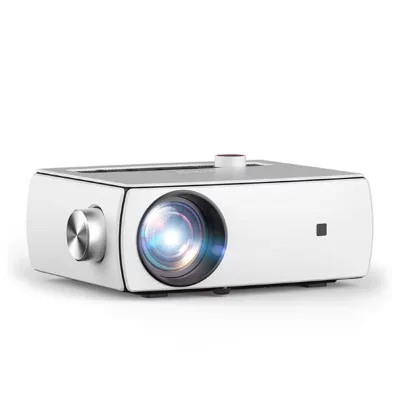
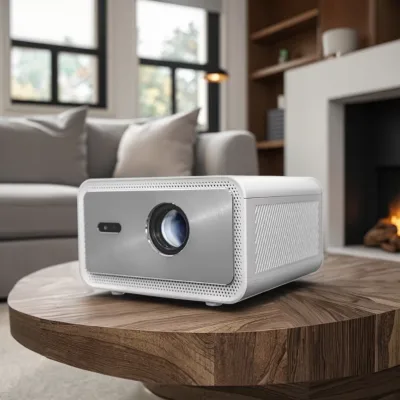
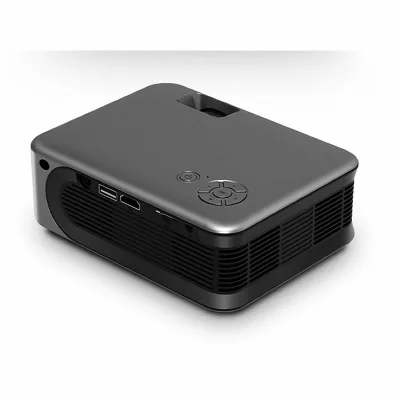
The observed listings include several distinct projector profiles. A portable model (E450) is listed with 720p native resolution (1280x720), Bluetooth 5.0, an LED image system, 30000-hour rated life span, compact dimensions of 107.8x157x119.7mm, and 1GB+8GB memory. A desktop model (S40) runs Android 11 with a neutral English UI, supports 2.4G/5G WiFi6, offers automatic keystone correction, and targets home use. A higher-specification unit (A11) claims native 1920x1080p resolution and maximum brightness of 15000 lumens (900 ANSI lumens), positioned for teaching and home use. Confirm which profile matches your market before comparing quotes.
Mixed-category noise is a real risk: the same keyword space surfaces automotive "Projector LED Lens" lighting (27W rated, IP67 waterproof, for car/motor/truck applications) that is unrelated to home projection. Filter listings by product model, packaging type (box versus carton paper), and origin notes such as Shenzhen or Foshan, China. When a listing's usage field reads "Business, Teaching, Theater, Home," ask the supplier to clarify which scenarios the unit is actually engineered for, since portable and desktop architectures differ significantly.
Technical Specifications to Verify
Resolution is the most commonly inflated specification. The observed listings distinguish native resolution (1920x1080p on the A11, 720p on the E450) from unsupported marketing brightness numbers, and buyers should insist on this same distinction. "15000 lumens (900 ANSI lumens)" illustrates why: ANSI lumens are the standardized measure, while raw lumen claims can be several times higher. One smaller listing even states brightness under 1500 lumens, showing the spread within the category. Request native panel specifications and, where possible, independent brightness measurement before accepting any figure.
Beyond resolution and brightness, verify the operating system and connectivity stack. Android 11 with a neutral English UI matters for resale markets requiring localization control; WiFi6 dual-band (2.4G/5G) support and Bluetooth 5.0 should be confirmed against actual radios, not just listing fields. Memory configuration (1GB+8GB observed) affects app performance. Also verify keystone correction behavior, physical dimensions (e.g., 25x15x13 or 25x31x24 packaging footprints), rated life span (30000 hours observed on two models), and working temperature ranges, then request a working sample to validate all claims.
Compliance and Safety Documentation
LED projectors are mains-powered consumer electronics, so compliance documentation should be collected before any pilot order, not after. Ask each shortlisted supplier for the safety and electromagnetic compatibility certificates applicable to your destination market, and verify certificate numbers against issuing-body databases rather than accepting PDF copies at face value. Do not assert or accept certification status that a supplier cannot document; the observed listings contain no certification claims, which makes independent verification even more important for this category.
Laser and LED light-source products may also fall under photobiological safety requirements in some jurisdictions, so confirm which standard, if any, applies to your target market and request the relevant test reports. For units running Android with wireless radios (WiFi6, Bluetooth 5.0 observed), radio equipment regulations in markets such as the EU add further documentation obligations. Request the supplier's declaration of conformity, assembly-quality procedures, and any factory audit reports. Keep all documents version-controlled per product model, because certificate scope often covers only specific configurations of a product line.
Cost Drivers and Commercial Terms
Observed listings in this category span a very wide price range (from under one dollar across the mixed keyword space to products listed up to 3000 USD), which reflects genuine differences in architecture: portable 720p units with basic memory sit far below native-1080p Android desktop machines. Build your cost model around the specification tier, not the headline price. Main cost drivers include the light engine, panel resolution, memory and SoC combination, optical components, housing materials, and whether smart features (OS, WiFi, Bluetooth) are included.
Commercial terms deserve equal attention. Observed minimum order quantities range from 1 to 100 units, indicating that sample-level purchasing is feasible, but unit pricing at MOQ quantities will differ substantially from container-scale pricing. Clarify what the quoted price includes: packaging (box versus carton paper observed), accessories, warranty terms, and after-sales support. Negotiate payment structures that protect the buyer on first orders, confirm who bears freight and insurance costs, and document incoterms explicitly. Never rely on a listing price as a contractual figure; require a written quotation tied to a confirmed specification sheet.
Supplier Qualification and Quality Control
Qualify suppliers against the specification, not against listing polish. Observed origin data points to Shenzhen and Foshan, China, both established electronics manufacturing regions, but geography is not a quality guarantee. Ask prospective suppliers for factory audits or third-party inspection reports, production capacity evidence for the specific model (E450, S40, A11 observed), and references from comparable B2B buyers. A supplier offering both automotive LED lens lighting and home projectors should be able to demonstrate separate production and QC processes for each line.
Quality control should combine pre-shipment inspection with clear acceptance criteria. Define an inspection checklist covering native resolution verification, brightness measurement against agreed methods, OS and wireless functionality, keystone correction, housing finish, and packaging integrity. Agree on sampling plans and defect classification in writing before the first production run. For electronics with firmware, request details of software version control and update capability, since Android-based units may ship with different builds. Retain golden samples from the approved batch as the reference standard for all future reorders.
Long-Term Procurement Checks
Long-term value in this category depends on parts availability and lifecycle continuity. LED light sources rated at 30000 hours (observed on two models) reduce lamp-replacement concerns, but other components—remotes, power adapters, remote controls, lens assemblies, and mainboards—still fail. Ask suppliers which spare parts they commit to supplying, for how long after production ends, and at what pricing. A supplier who cannot commit to post-production support creates hidden costs for warranty service in your market.
Structure reorders around documented stability rather than assumptions. Track whether the supplier changes internal components, firmware versions, or memory configurations between batches without notice, and require written notification of any engineering change. Re-verify sample units from each new production batch against your golden sample, and monitor return-rate data from your market to catch quality drift early. Also review certification validity periodically, as standards evolve and renewals lapse. Buyers who treat the supplier relationship as an ongoing engineering partnership—rather than a series of transactions—consistently achieve fewer defects and more stable landed costs across product generations.
FAQs
What is the waterproof rating for the LED light?
The LED light features an IP67 waterproof rating, ensuring protection against dust and temporary immersion in water. This specification makes it suitable for outdoor applications on cars, trucks, and motorcycles where exposure to rain or splashing water is common during operation.
How many wires does the LED light require for installation?
The LED light requires four wires for proper electrical connection and operation. This wiring configuration supports the dual beam functionality, allowing separate control for the high beam and low beam modes while maintaining the specified power consumption levels for each setting.
What is the expected lifespan of the projector light source?
The projector light source offers a lifespan exceeding 30,000 hours of continuous operation. This extended durability ensures long-term reliability for both automotive lighting and portable projector applications, reducing the frequency of replacements and maintenance costs for business or home users.
Can the LED light be customized for specific vehicle models?
Customization is available for the LED light to meet specific vehicle model requirements. Buyers can request tailored solutions for mounting brackets or lighting modes, ensuring the product fits various car, motor, or truck applications while maintaining the standard IP67 waterproof and stainless steel bracket features.
What resolution does the portable projector support for home use?
The portable projector supports a native resolution of 1920 by 1080 pixels for high-definition output. This Full HD capability ensures clear image quality for home theater, teaching, or business presentations, complementing the Android 11 system and automatic keystone correction features for easy setup.
Which color temperatures are available for the dual beam light?
The dual beam light offers color temperatures of 6500K for white and 4300K for yellow light. This combination allows users to switch between bright white illumination for high beams and warmer yellow light for low beams, optimizing visibility in various weather and driving conditions effectively.